
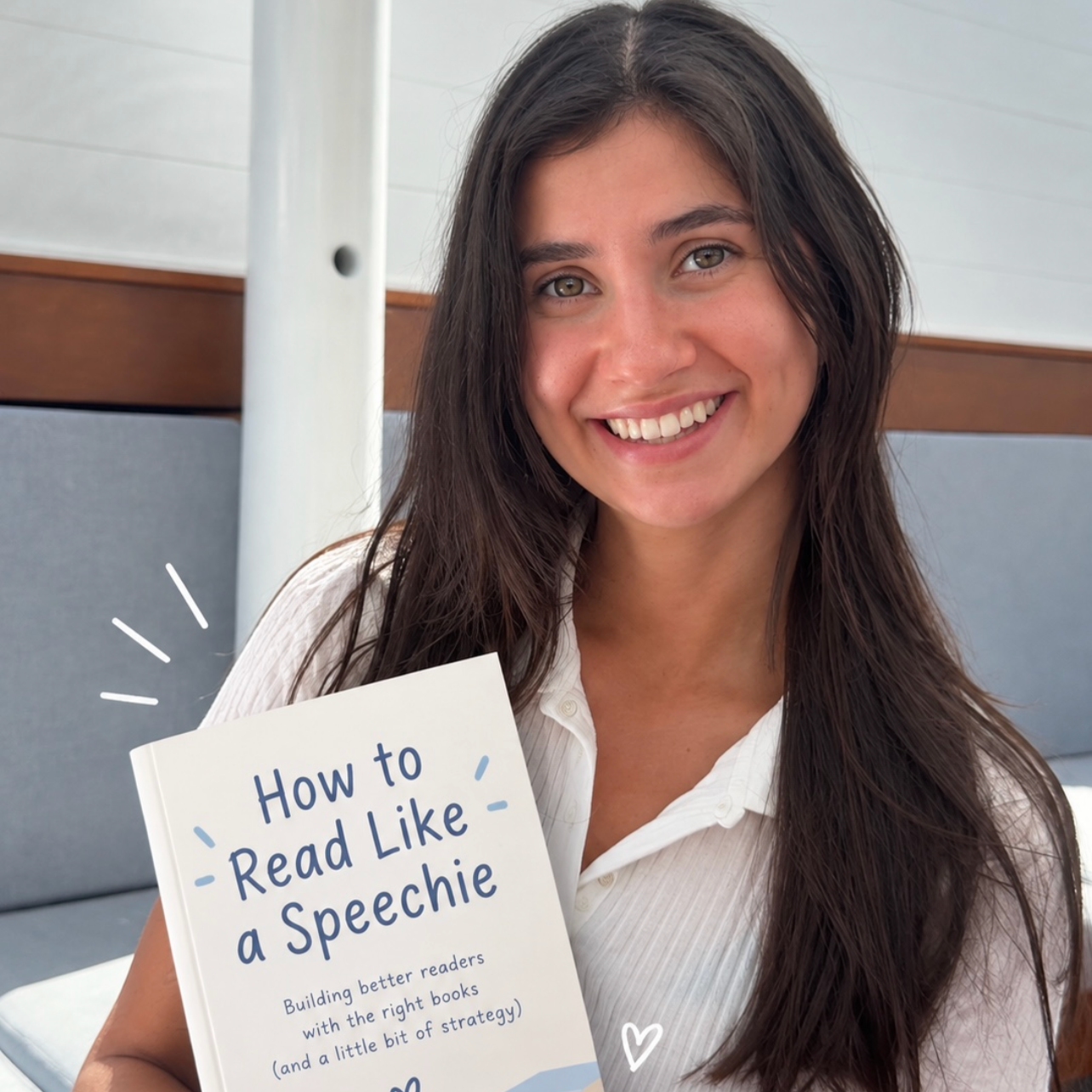
How to Read Like a Speech Pathologist: 6 Simple Ways to Make Story Time More Interactive
If you've ever watched a speech pathologist read a book with a child, you may have noticed that we don't always read the book from beginning to end!
We might stop to talk about a picture, make an animal sound, repeat a word, sing a familiar part of the story, or even skip some of the words on the page.
I use books every day as a speech pathologist, and I regularly encourage parents and caregivers to read with their children as often as possible. Reading together is such a lovely way to support children's language, communication and early literacy skills but it doesn't have to feel like a lesson.
Parents sometimes notice that I am doing something slightly different when I read with their child and want to know what they can do at home.
So, I thought I'd share some of my favourite ways to make story time a little more interactive!
Is My Child’s Speech Developing? Speech Milestones by Age 2, 3, 4 & 5
Is My Child’s Speech Developing Normally? Speech Milestones by Age 2, 3, 4 & 5
As a parent, it can be difficult to know whether your child’s speech and language development is progressing as expected. You might wonder:
“Should my 2-year-old be talking more?”
“How clear should my 3-year-old’s speech be?”
“Is it normal that my 4-year-old still mispronounces some sounds?”
“When should I see a speech pathologist?”
Children develop communication skills at different rates, so there is no single age at which every child should be able to say every sound or use every type of sentence. However, there are broad developmental milestones that can help parents understand what to expect and recognise when extra support may be helpful.
At City Beach Speech, we provide mobile paediatric speech pathology across Perth’s inner western suburbs, supporting children with speech, language, literacy and communication development.
How to Access Speech Therapy in Australia (You Don’t Need a Referral)
How to Access Speech Therapy in Australia
If you’re worried about your child’s speech or language development, one of the biggest barriers can feel like simply knowing where to start. The good news? You do not need a referral to see a private speech pathologist in Australia. You can contact a clinic directly and book an assessment.
Here’s how the system works — and what your options are.
When Your Child Starts to Stutter: What Parents Should Know.
Stuttering is a common parent concern & usually begins around age 3. This blog provides an overview of stuttering and what you can do to help your child today.
Gestalt Learning in Children with ASD: What Parents Should Know
Practical Tips
Assume Communication First: Instead of correcting immediately, try to interpret what your child might mean.
Model Flexible Language: If your child says, “Time to blast off!” when leaving, you might respond, “Yes, it’s time to go outside.” This connects their gestalt to more context-specific language.
Expand Naturally: If your child says a memorised phrase like “Do you want a snack?”, you can model: “I want a snack.” This demonstrates how language can be recombined.